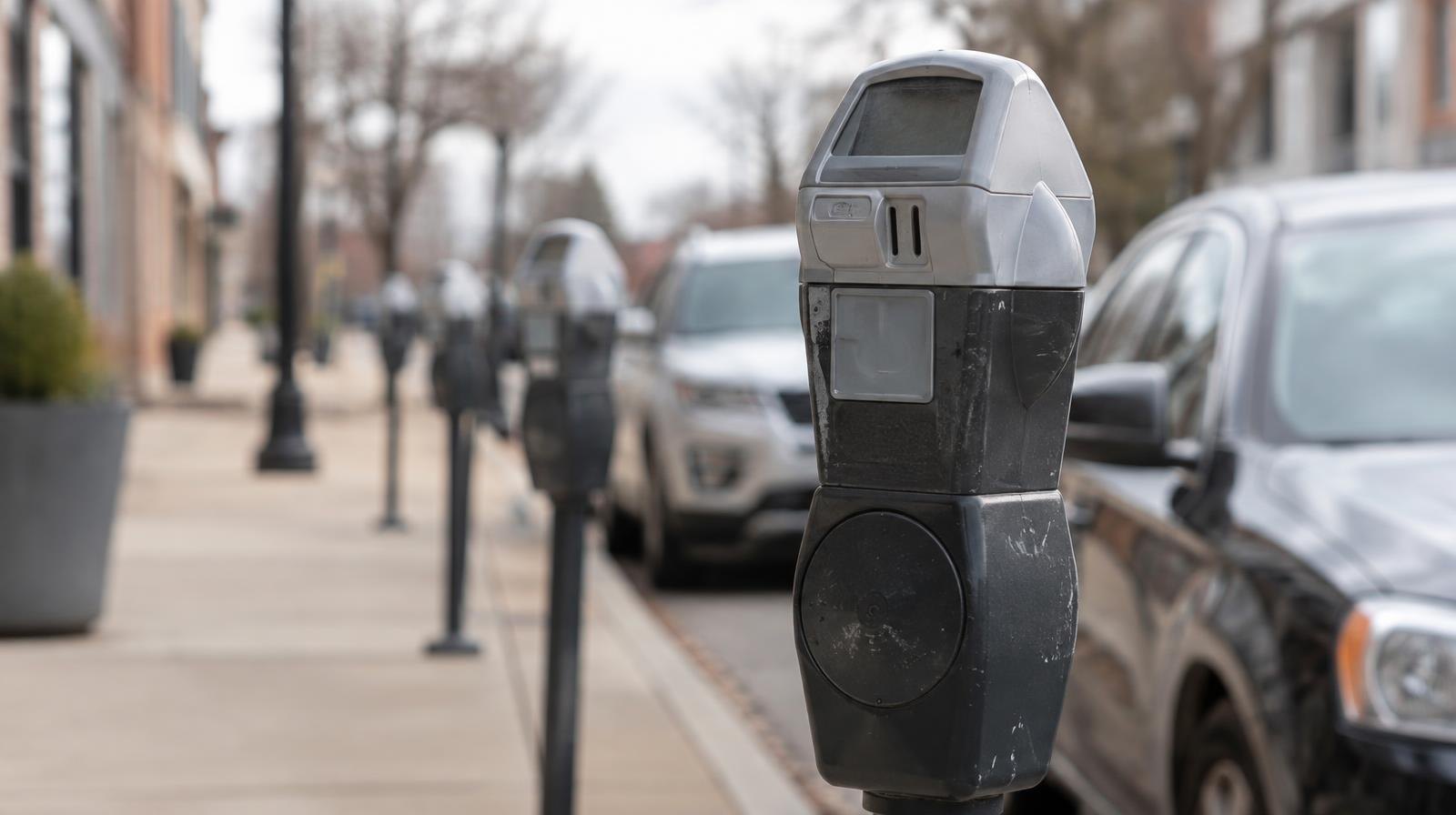
Free parking in downtown Franklin is more than 80% full while paid lots sit less than half-occupied, a city parking study found.
The Park Franklin Steering Committee reviewed the full findings Monday, Oct. 19, at its second meeting. Walker Consultants, the study team, drew on 5,179 survey responses and 53 in-person interviews with business owners, employees, residents and visitors. The study's central conclusion: Franklin's downtown parking problem is not a shortage of spaces but a gap in management, legal authority and pricing signals that could spread drivers across available supply.
"Incentives are the core constraint, not supply," the study presentation stated. "Franklin has available supply just outside the downtown core."
Seventy-one percent of respondents said more free parking would most improve their downtown experience. Seventy-eight percent said they never pay for parking, and 52% called paid lots too expensive. Only 2% said paid parking is a good value.
The demand crunch hits hardest on Main Street. Parking around Main Street is more crowded than outlying streets, the study found, with 313 on-street spaces near Main Street compared to 556 on the fringe. Two-thirds of respondents said the farthest they have ever parked is within 600 feet of the public square.
Employee parking tops business concerns
Downtown business owners ranked limited employee parking options as their No. 1 concern, with 46% citing it. Thirty-eight percent said customers cannot find convenient parking, and 32% pointed to event and festival congestion.
Nearly half of downtown employees surveyed said they would use a designated employee parking area. Another 39% said maybe.
Franklin has no employee parking permits, unlike peer cities the study examined. Naperville, Illinois, issues free downtown employee hang-tags to businesses, allowing all-day parking on upper garage levels. Boulder, Colorado, offers permits at $79 per month.
14 agencies, no parking office
One of the study's sharpest findings involved governance. Franklin splits parking administration across 14 different stakeholders with no formal coordinating office, according to the presentation. That is more fragmented than any peer city examined, including Charleston, South Carolina, which has four departments plus a contracted operator and institutional owners outside city jurisdiction.
Asheville, North Carolina, and Boulder each run parking through a single named office. Greenville, South Carolina, operates 18 facilities under one parking department.
The study also found that Franklin has no rule against re-parking: drivers can move one space and restart the time-limit clock. There is no downstream consequence for repeat offenses or unpaid tickets.
Aldermen discuss longer time limits
WKRN reported that aldermen discussed extending the two-hour on-street parking limit to three hours during an Oct. 13 Board of Mayor and Aldermen (BOMA) work session.
No changes have been approved.
Alderman Greg Caesar said at that work session that the issue comes down to what the city loses when people leave downtown early. "They probably would have spent more money in our downtown … and probably would have made more memories," Caesar said, according to WKRN. City staff said the city is not proposing paid parking, WKRN reported.
What comes next
The study team outlined three tracks for future recommendations: fixing the current system by spreading demand to underused lots and creating employee parking, updating city code to support growth, and managing special-event overflow into neighborhoods.
A special events survey is open through Nov. 9. The study team plans to collect additional parking data during PumpkinFest before moving from findings to formal recommendations for the BOMA.